
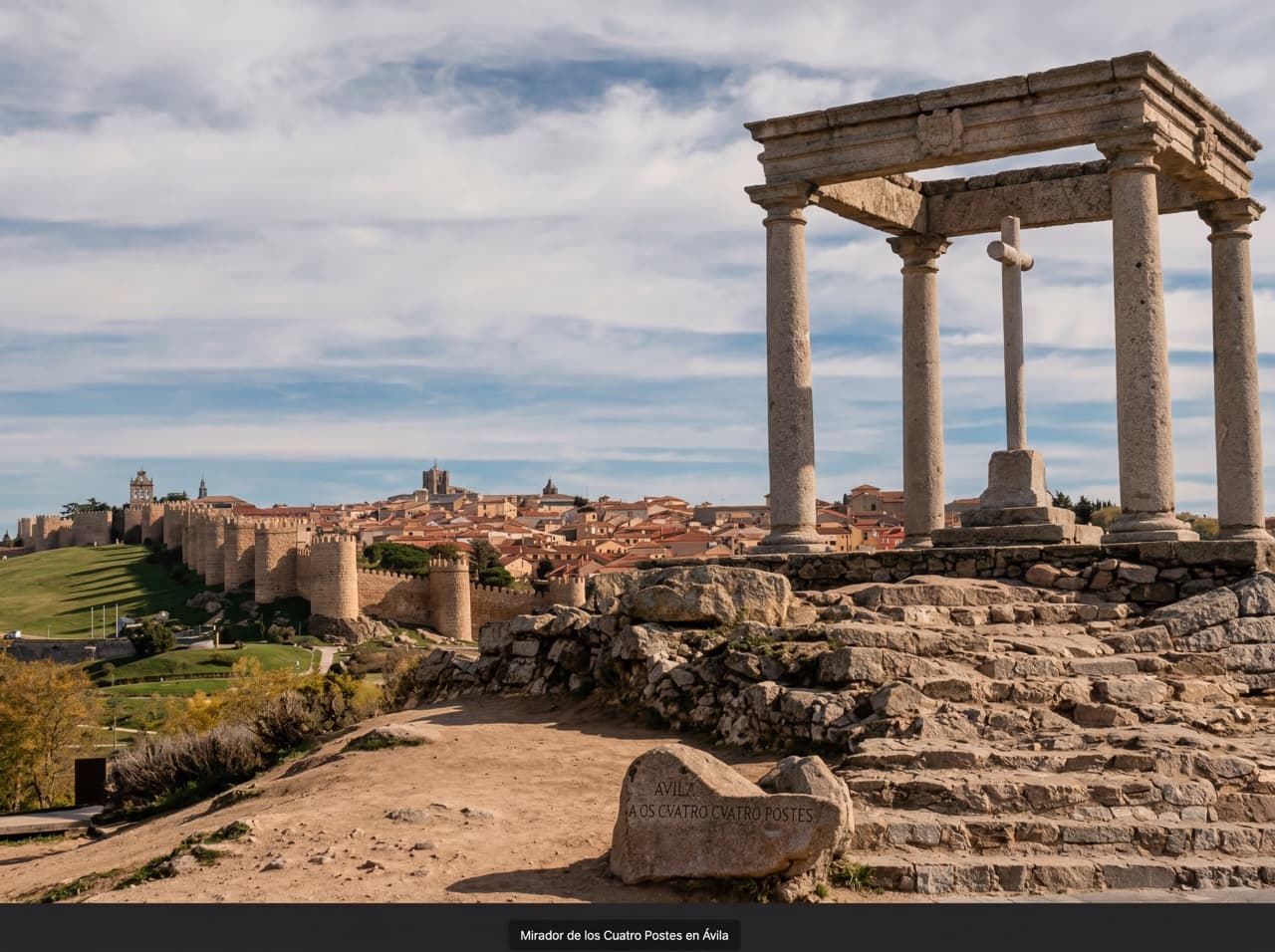
Ávila is the great unknown among day trips from Madrid. Toledo and Segovia get all the fame, but Ávila holds something the other two cities don't: the feeling of having gone back a thousand years in time. Its 11th-century walls, the best preserved in Europe, surround a UNESCO World Heritage old town where the legacy of Saint Teresa of Ávila permeates every corner. If you're looking for authenticity, stillness and a city that hasn't given way to mass tourism, Ávila is your destination.
How to get to Ávila from Madrid
By train, bus, car or a guided tour: each option changes your day and the best one depends on who you're travelling with. One key point that confuses many: there's no AVE to Ávila, you travel on regional (Media Distancia) trains (and its station is a short walk from the old town).
We compare it all, times, prices and what to choose, in how to get to Ávila from Madrid. The most efficient option for making the most of the day is combining Ávila and Segovia in a single guided day trip from Madrid: two UNESCO World Heritage cities in one day with transport and bilingual guide included.
What to see in Ávila: the 5 must-sees
The Medieval Walls are the city's great symbol. A 2.5 km perimeter with 88 semicircular towers and 9 gateways. You can walk along the top — the sentry walk offers priceless panoramic views over the Castilian countryside. Access to the walk: €8 (reduced €5).
The Fortress Cathedral is the first Gothic cathedral in Spain (12th century) and the only one in Europe built as part of the city's defensive walls. Its apse juts out from the walls like just another tower. Austere and powerful interior, with an impressive sacred art collection.
The Convent of Saint Teresa is built on the birthplace of Teresa de Cepeda y Ahumada, the great Spanish mystic of the 16th century canonised as Saint Teresa of Ávila. The crypt preserves the cell where she was born.
The Basilica of San Vicente is a jewel of 12th-century Castilian Romanesque architecture, built over the site of the martyrdom of Saint Vincent of Zaragoza. It is one of the most beautiful and important Romanesque churches in Spain.
The Cuatro Postes Viewpoint, on the outskirts of the city on the far side of the Adaja River, offers the classic view of Ávila: the full circuit of walls in profile against the Sierra de Gredos mountains. It is the first stop in Ávila on the Ávila + Segovia day trip (10 minutes).
Full-day itinerary for Ávila
In short: start at the Cuatro Postes for the overall view, climb the wall's adarve, continue with the Cathedral, the Convent of Saint Teresa and the Basilica of San Vicente, have Ávila IGP rib steak at midday and leave the afternoon to wander the old town before heading back to Madrid.
You have the full hour-by-hour itinerary, with prices, in what to see in Ávila in one day.
What makes Ávila unique: Spain's coldest and highest city
Ávila is Spain's highest provincial capital, at 1,130 metres above sea level. This has a direct effect on the climate: in summer it's the coolest of the three cities (20–28°C compared to Toledo's 35–40°C). In winter it can be intensely cold, but snow on the medieval walls is an image that stays with you.
Another distinguishing feature of Ávila is its scale. It's a small city (50,000 inhabitants), without the mass tourism of Toledo, which gives it a more authentic and peaceful atmosphere. In a single day you can see virtually everything important without rushing.
A detail many visitors don't know: the Yemas de Santa Teresa are Castile's most famous sweet, a convent recipe of egg yolks and sugar with protected designation of origin. Buy a box at the convent shop to take back to Madrid.
Is Ávila worth it if you've already been to Toledo and Segovia?
Absolutely yes. Ávila offers a different experience from the other two cities: quieter, more mystical, more Castilian in the purest sense. The walls have no rival in Europe, the connection to Saint Teresa is unique, and the feeling of walking along the battlements looking out over the Castilian plateau is something you won't find anywhere else.
If you have only a few days in Madrid and can only do one day trip, we understand if you choose Toledo or Segovia. But if you can do two, or have more time, don't dismiss Ávila. The tour that combines it with Segovia in a full day is one of the best ways to discover both cities without shortchanging either.
Frequently asked questions
How do you get to Ávila from Madrid?
There is no AVE to Ávila: you travel on regional (Media Distancia) trains, mainly from Príncipe Pío with some services also from Chamartín (1h20 to 1h40, tickets from around €7 one way), and the station is a short walk from the old town. The easiest way to make the most of the day is the guided Ávila + Segovia day trip from Madrid, with transport and bilingual guide included.
How much does it cost to visit Ávila from Madrid?
The best value is the combined Ávila + Segovia tour from €59 per person, which includes round-trip transport, a bilingual guide (Spanish and English), a photo stop at Los Cuatro Postes and free time in Ávila, and a guided walking tour in Segovia. During booking you can add the Alcázar of Segovia entrance with guide for €10 more per adult (€69 total).
How long is the trip and what time does it leave?
Around 10 hours 30 minutes door to door. The daily departure is at 08:30 from the San Bernardo 5 visitor centre, Local 13 (Gran Vía area), returning at 17:30 and arriving back in Madrid around 19:00. The day is planned so you can see two UNESCO World Heritage cities without feeling rushed.
What can you see in Ávila in one day?
The essentials all fit inside the walls: the 11th-century Medieval Walls (2.5 km perimeter, 88 towers, the best preserved in Europe), the 12th-century Fortress Cathedral, the Basilica of San Vicente (Castilian Romanesque), the Convent of Saint Teresa built over her birthplace, the Plaza Mayor (Mercado Chico) and the Cuatro Postes viewpoint, the classic view of the walled city with the Sierra de Gredos behind.
Related day trips
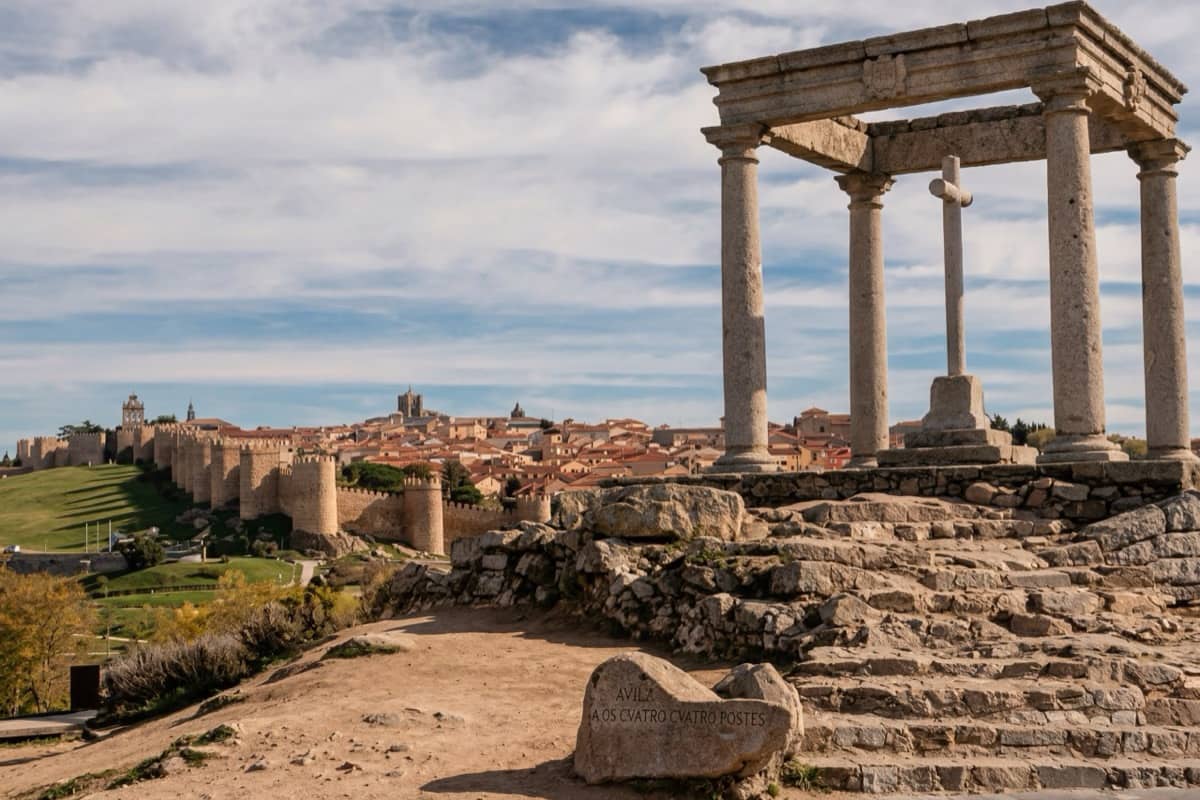
Ávila and Segovia Day Trip from Madrid – Full Day Tour
Discover two World Heritage cities in one day: medieval walls, Roman aqueduct, Alcázar, cathedrals and free time to explore at your own pace.
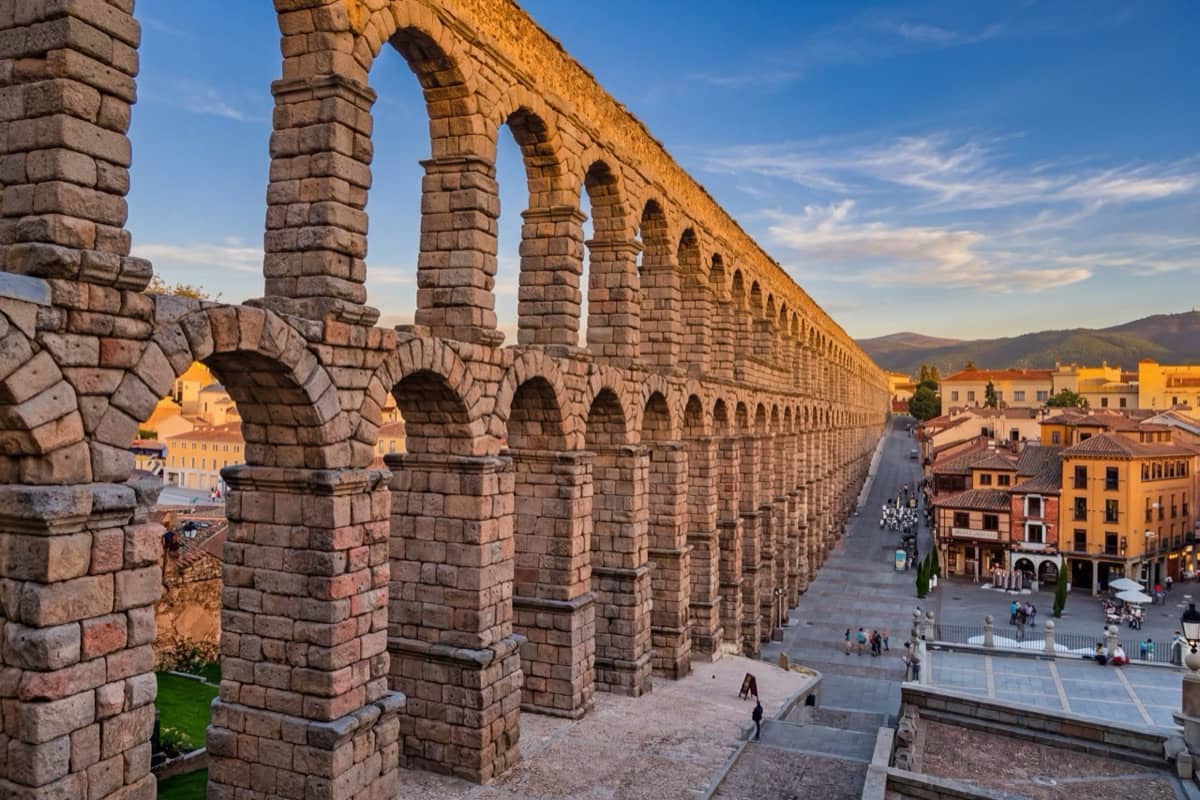
Segovia Day Trip from Madrid – Full Day with Guide and Alcázar Option
Discover Segovia on a full-day trip from Madrid including transport, professional guide, guided walking tour and free time. Optional: Alcázar of Segovia entrance (30 min), visited during your free time.
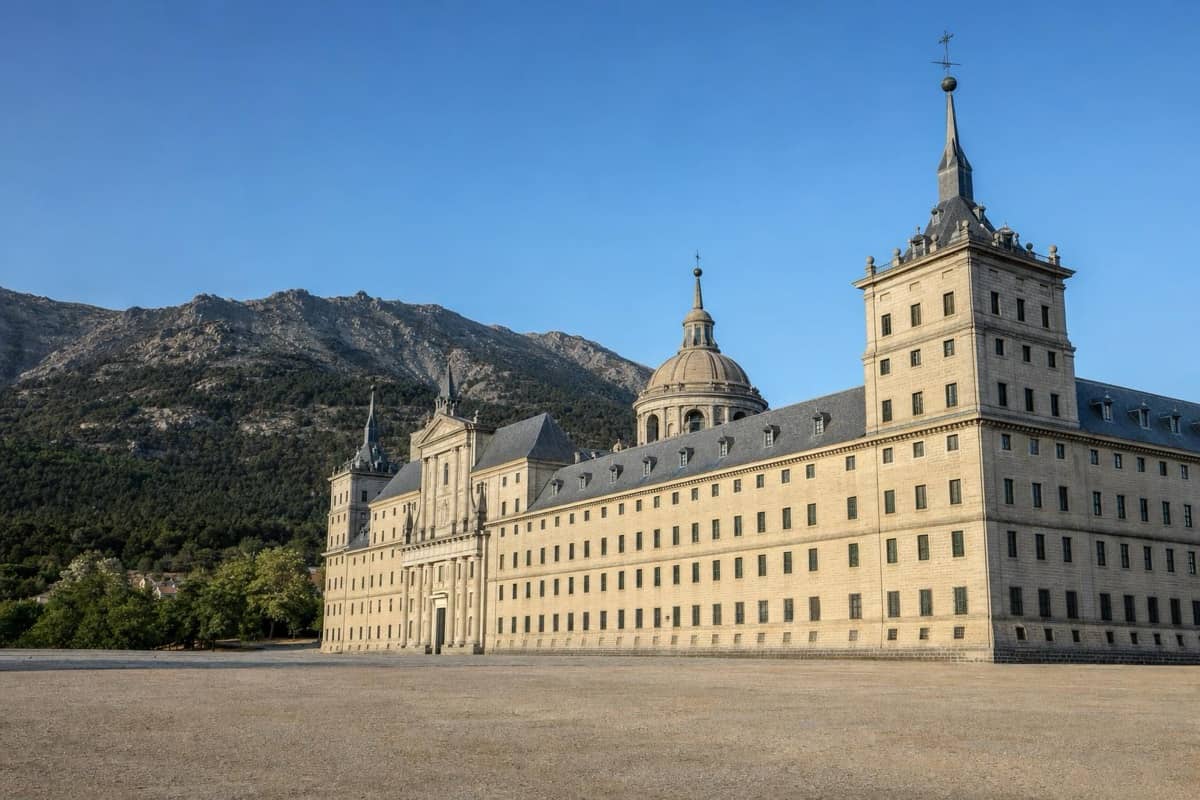
El Escorial, Valley of the Fallen and Segovia from Madrid – Full-Day Trip
El Escorial, the Valley of the Fallen (Valle de Cuelgamuros) and Segovia in one day from Madrid, with a guided walk at each stop and the option to add guided visits inside the Monastery and the Alcázar of Segovia.
Staying in Madrid? Madrid sightseeing bus (Big Bus) from €26