
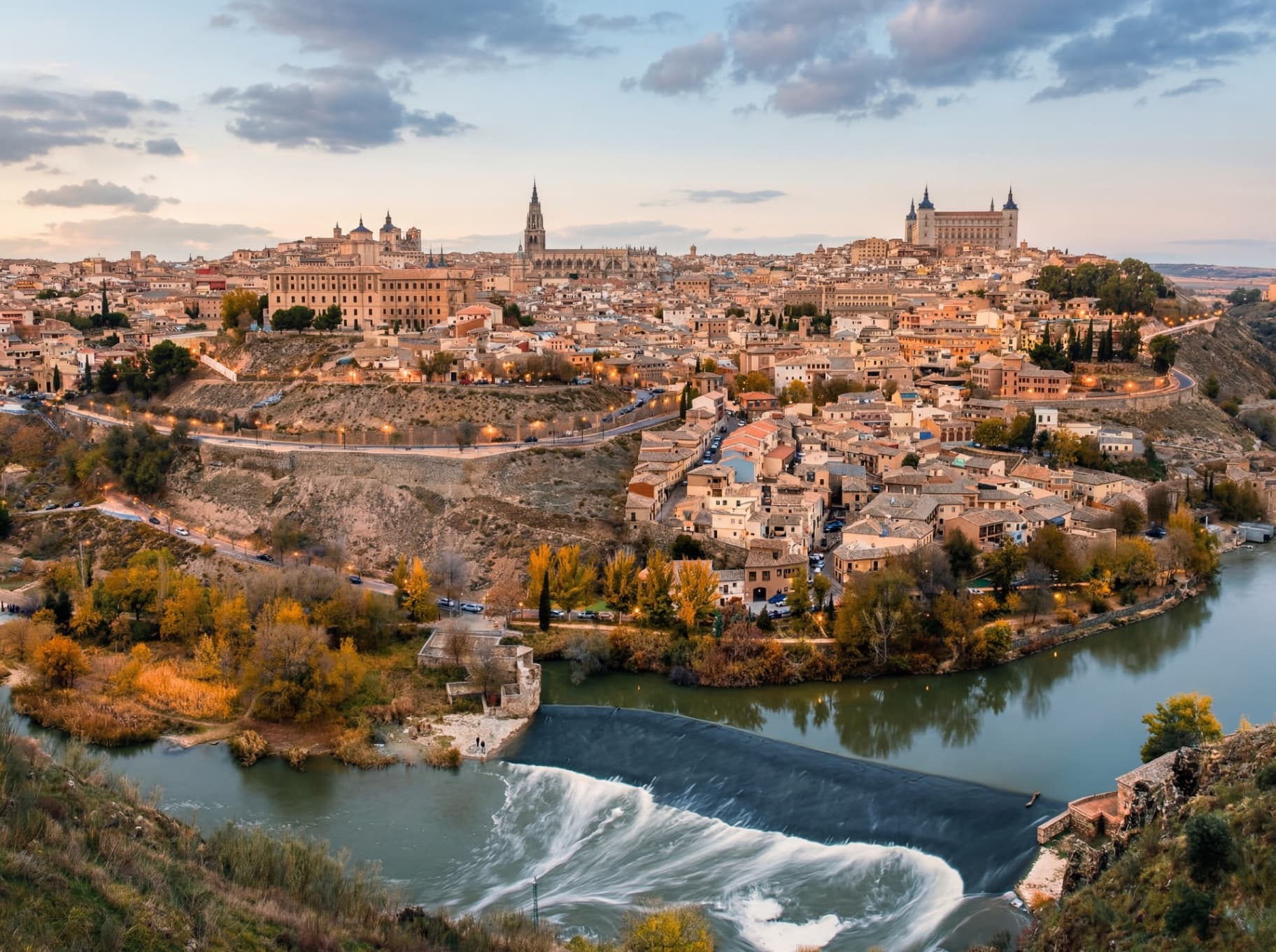
Less than an hour from Madrid, on a hill wrapped by the River Tagus, waits a city that condenses two thousand years of Spanish history into a handful of cobbled streets. Toledo isn't a museum: it's a living city whose entire old town is a UNESCO World Heritage Site, where Christians, Muslims and Jews lived side by side for centuries and left their mark on the very same stone.
That's why it is, by some distance, the most popular day trip from the capital. It fits perfectly into a three-, four- or five-day trip to Madrid: you can walk it in a day, but you take in centuries.
This guide is different from the others on the blog. It isn't the hour-by-hour itinerary or the train comparison —you'll find those in the specific guides we link below—. Here you'll get the why: the history that makes Toledo unique, the must-sees and what they mean, and a mental map to plan your visit sensibly.
The city of three cultures: a short history of Toledo
It all starts with geography. The Tagus wraps around Toledo's hill on three of its four sides, turning it into a natural fortress. The Romans saw it at once and founded Toletum, with its circus, walls and roads. Everything else was built on top of that origin.
After the fall of Rome, the Visigoths made Toledo the capital of their kingdom and the seat of the great councils that shaped Christian Hispania between the 6th and 7th centuries. For almost three centuries it was the political and religious heart of the peninsula.
In the year 711 the city passed into Muslim hands and became Ṭulayṭula, later the capital of a taifa. From that era come the labyrinth of streets, the odd remnant of a mosque and, above all, an atmosphere of coexistence that bore its most brilliant fruit in the School of Translators: between the 12th and 13th centuries, Christian, Jewish and Arab scholars translated Greek and Eastern science and philosophy here, and from Toledo they lit up medieval Europe.
At the same time, Toledo was home to one of the largest Jewish communities in Sefarad. The Jewish quarter, with its synagogues, was for centuries one of the centres of Hebrew culture on the peninsula, until the expulsion of 1492.
In 1085 Alfonso VI took the city without destroying it, and Christian Toledo inherited —rather than erased— the legacy of the other two cultures. Churches, synagogues and former mosques have shared the same old town ever since. Toledo went on to be the capital of imperial Spain until, in 1561, Philip II moved the court to Madrid. That loss of capital status, paradoxically, froze the city in time and has left it to us almost intact.
That's the key to understanding what you'll see: you're not visiting one city, but three overlaid —Christian, Muslim and Jewish— on the same walls. Knowing it, every corner tells you something.
Toledo's must-sees and why they matter
These are the landmarks that sum the city up. Here we tell you what each one means; the exact order to see them in, opening times and how long to spend are in the step-by-step one-day Toledo itinerary.
The Primate Cathedral is the heart of Christian Toledo and one of the peaks of Gothic architecture in Spain: seat of the country's primate, it holds centuries of art inside that justify the visit on their own.
The Alcázar crowns the hill and dominates the city's skyline from every angle. The fortress you see today houses the Army Museum, but its silhouette has been Toledo's symbol for centuries.
Plaza de Zocodover has been the nerve centre since the Middle Ages: the point where every road meets and the best place to get your bearings.
The Mosque of Cristo de la Luz, from around the year 999, is one of the Andalusi testimonies still standing: a small, serene building that captures Muslim Toledo.
The Synagogue of El Tránsito —now the Sephardic Museum— and Santa María la Blanca are the two great jewels of Jewish Toledo, with Mudéjar decoration that leaves you speechless and tells the story of the Sephardic community.
The Monastery of San Juan de los Reyes was the Catholic Monarchs' great gesture of power; the chains of the Christian captives freed during the Reconquista still hang on its façade.
The Church of Santo Tomé holds 'The Burial of the Count of Orgaz', the masterpiece El Greco painted around 1586, which on its own sums up Toledo's Golden Age.
And the Mirador del Valle, across the Tagus, gives you the city's iconic panorama: the photo that sums up the trip and the one almost everyone takes home.
How to plan your day in Toledo
How you get there changes your day. Train, bus, car or an organised tour each have their own advantages: we compare them all in how to get from Madrid to Toledo, and if you want the detail on current prices and timetables, in train, bus or tour: which is best.
How much time do you need? Half a day covers the essentials; a full day lets you go inside the monuments at your own pace and have a proper lunch. We help you decide in Toledo: half day vs full day.
And the concrete route, hour by hour, with the best order to save yourself extra climbs, is in the one-day Toledo itinerary. We won't repeat it here.
Two local-guide tips that hold for any plan: set off early —from 9:30 the city wakes up and the crowds haven't arrived yet— and wear comfortable shoes, because Toledo is hills and stone from start to finish.
Go independently or with a guide?
On your own you gain flexibility over timings and a lower cost. It's a good option if you already know Toledo or you enjoy organising the day your own way.
With a guide you gain what you can't see at a glance: context. The Roman, Visigothic, Andalusi, Jewish and Christian layers are invisible unless someone tells you about them on the very street where they happened. It's the difference between seeing the Cathedral and understanding the Cathedral.
If you're unsure how much time to give it or which format suits you, we break it down in half day vs full day. And if you'd like a local guide with transport and logistics sorted, you can see the options in our Toledo day trips from Madrid.
Toledo, Segovia or Ávila: if you can only pick one
All three are World Heritage cities and all three can be done in a day from Madrid, but they offer very different trips. Toledo is history, art and three cultures concentrated. Segovia is pure visual impact: an intact Roman aqueduct and a fairy-tale castle. Ávila is walls and calm, the most relaxed getaway of the three.
If you have several days, some combine well (Toledo and Segovia fit, with planning, into one intense day). And if you're still unsure which to pick first, we compare them in depth —distances, times and traveller profiles— in Toledo, Segovia or Ávila: which to visit first.
Keep exploring: the complete Toledo guide
This guide is the starting point. Depending on what you need, jump to the piece that answers each question:
· The step-by-step route → What to see in Toledo in one day.
· How to get there (train, bus, car or tour) → How to get from Madrid to Toledo.
· The comparison with real 2026 prices → Madrid–Toledo: train, bus or tour.
· How much time to give it → Half day vs full day.
· Choosing between the three cities → Toledo, Segovia or Ávila.
· And a practical planning guide (where to eat, tips) → Toledo day trip from Madrid.
Frequently asked questions about visiting Toledo
Is Toledo worth visiting from Madrid? Very much so. Less than an hour from the capital you get an entire old town listed as a World Heritage Site and two thousand years of history; it's the most popular day trip from Madrid for a reason.
Can you see Toledo in one day? Yes, the essentials are perfectly doable in a day. If you want to go inside several monuments at ease, a full day is better; we break it down in half day vs full day.
Why is it called the city of three cultures? Because Christians, Muslims and Jews lived together here for centuries and left their mark: synagogues, a former mosque and churches share the same old town.
When is the best time to visit Toledo? Spring and autumn, with pleasant temperatures. Avoid the July and August heat on the stone, and arrive early to enjoy the city before the crowds.
What can't I miss if I'm short on time? The Cathedral, Plaza de Zocodover, Santo Tomé (El Greco's painting) and the Mirador del Valle. For the best order, follow the one-day itinerary.
Toledo or Segovia for a day trip? Toledo if you prioritise history and art; Segovia if you're after visual impact. The full comparison is in Toledo, Segovia or Ávila.
Frequently asked questions
How far is Toledo from Madrid?
Toledo sits about 70 km from Madrid, on a hill wrapped by the River Tagus. By Renfe AVE/AVANT high-speed train from Atocha the journey takes 30 to 33 minutes; by Alsa bus from Plaza Elíptica, around 1 hour 15 minutes.
How much does a day trip to Toledo from Madrid cost?
From €34 for the half-day Express tour (6 hours). The full-day Toledo Experience (8 hours 30 minutes, with an optional guided Cathedral visit) starts at €39, and Toledo Complete (11 hours, with a guided Cathedral visit and a VIP wristband to 7 monuments) from €84.
What is there to see in Toledo?
Toledo is the city of three cultures, its entire old town a UNESCO World Heritage Site since 1986. The must-sees: the Primate Cathedral, the Alcázar, the Jewish quarter with its synagogues, and the Mirador del Valle, the most famous view over the Tagus River.
Where do the Toledo tours depart from?
Toledo-only trips leave from the Neptune Fountain (Fuente de Neptuno) on Plaza de Cánovas del Castillo (Banco de España metro, Line 2); the Segovia and Toledo combo leaves at 8:45 am from San Bernardo 5 (Gran Vía area). Arrive 15 minutes before departure and show your ticket (digital or printed) to the operator's staff before boarding the coach. Bilingual Spanish and English guides and free cancellation up to 24 hours before.
Related day trips
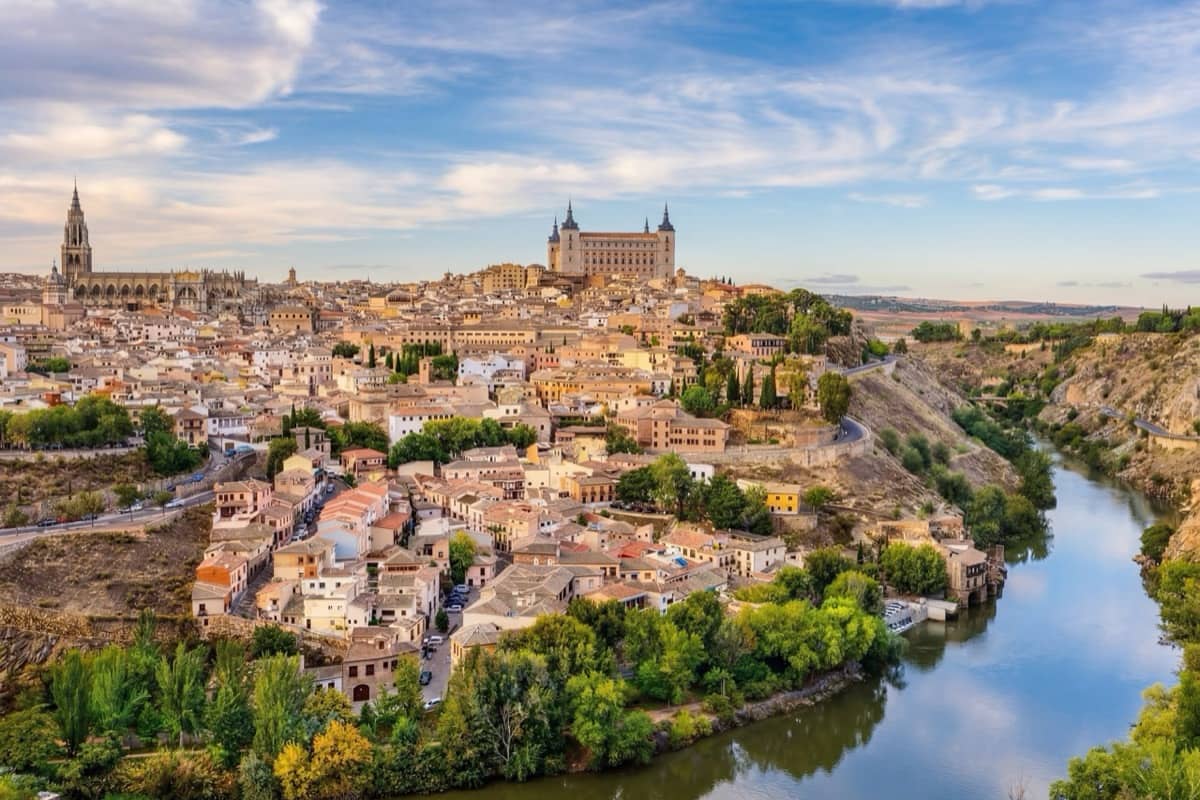
Toledo Day Trip from Madrid – Half-Day Express Tour
Discover Toledo, the city of three cultures, on a half-day express tour from Madrid with transport and bilingual local guide included.
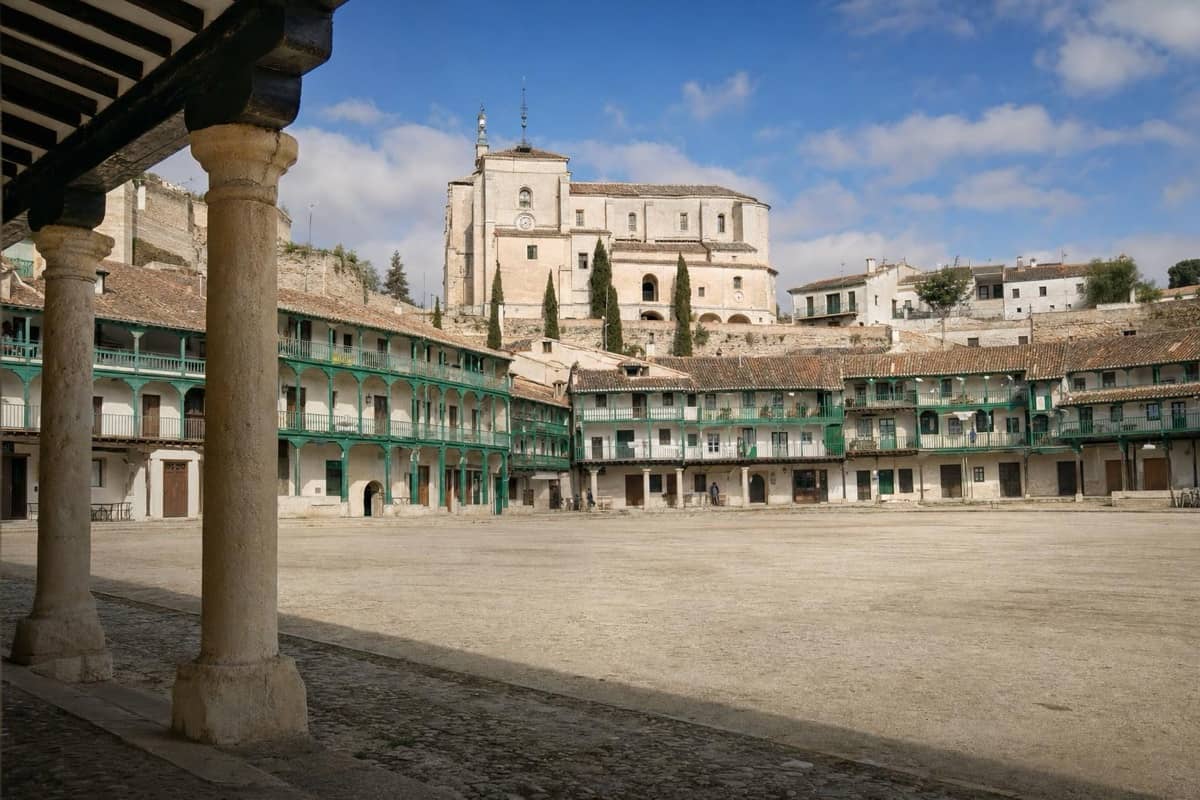
Chinchón, Aranjuez and Toledo from Madrid – Full-Day Trip
Three stops in a single day from Madrid: the Plaza Mayor of Chinchón, the Royal Palace of Aranjuez with admission included and Toledo's old town, with a guided walk at each one and 4 hours of free time in Toledo.
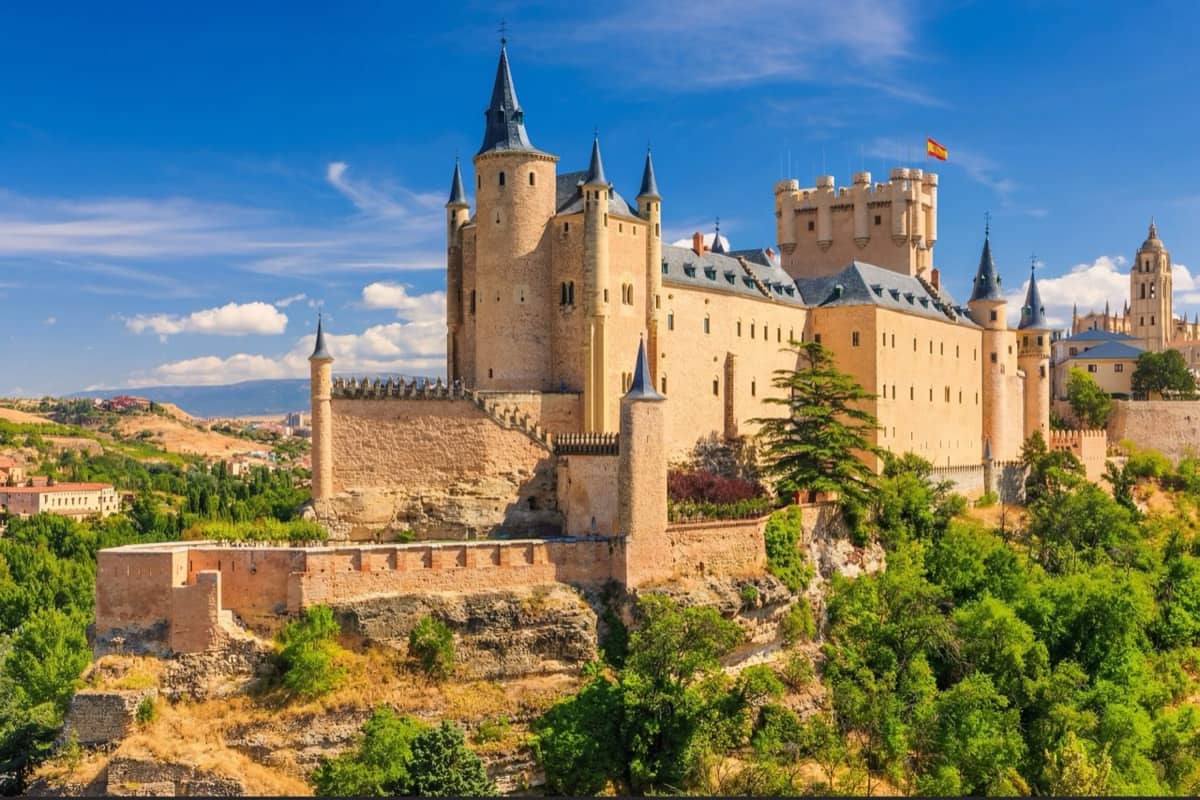
Segovia and Toledo Day Trip from Madrid – Full Day Tour with Guide and Optional Alcázar Entry
Discover two of the most impressive cities near Madrid in one day: medieval historic centers, iconic monuments and free time to enjoy at your own pace.
Staying in Madrid? Madrid sightseeing bus (Big Bus) from €26