
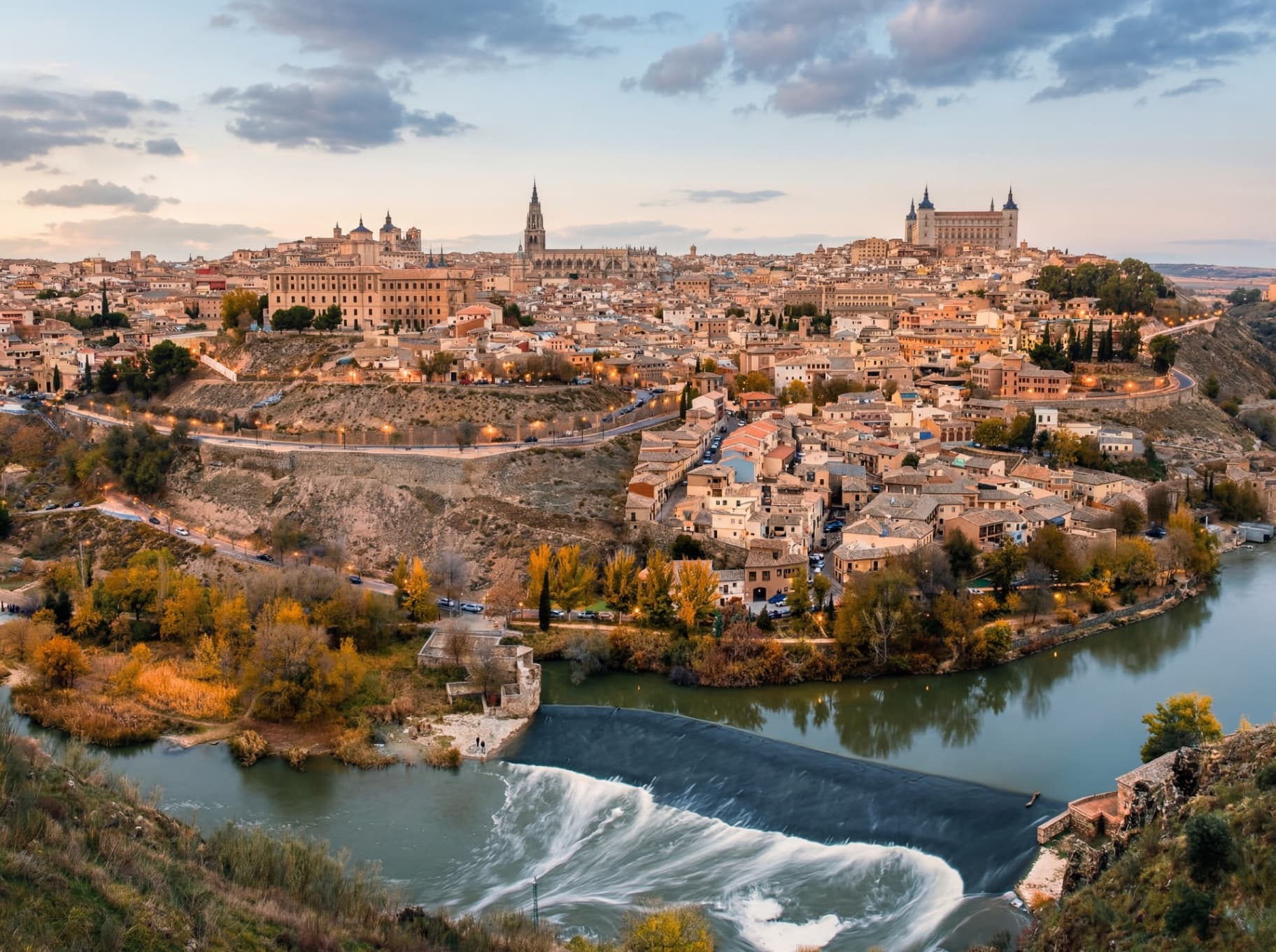
Toledo is one of those cities that looks small on a map but turns out to be inexhaustible on foot. In a day you can see the essentials and leave feeling you've understood something important about Spanish history. But to do that you need the right order: Toledo has steep hills, alleyways that lead nowhere and monuments that close at 2pm without warning. And if you want the context and history of the city first, start with the Toledo from Madrid guide.
This itinerary has been designed from years of doing the route with groups of travellers. It's not the itinerary from a generic travel guide: it's the one that actually works, with real timings and tricks that only local guides know.
Before you set off: three things that make all the difference
Leave early. The most-repeated recommendation has a solid reason: Toledo in summer can exceed 38°C at midday and the cobbled streets retain heat. If you leave Madrid before 9:30am, you arrive in the city while it's still cool, monuments are empty and the morning light is perfect for photographs.
Wear comfortable, closed shoes. Toledo is built on a hill surrounded by the Tagus River. That means most streets in the historic centre are on slopes. This is not a walk in a park: you need to walk and climb. Trainers or shoes with a comfortable sole are essential.
If you're going to enter the Cathedral or the Alcázar, buy your tickets online the night before. In high season (Easter, summer, October bank holidays) ticket office queues are 30-45 minutes and some sessions sell out. Cathedral entry costs around €12 at the door.
Morning: Mirador del Valle and the historic centre
The first stop is the Mirador del Valle, and it's non-negotiable. This esplanade on the south bank of the Tagus offers the most famous panoramic view of Toledo: the entire medieval city reflected over the river, with the Cathedral and Alcázar dominating the skyline. This is the moment for the photographs that end up on Instagram. If you go on one of our day trips, keep in mind that the Mirador is not part of the included programme: it sits outside the old town and you would have to get there on your own, by taxi.
From the Mirador, the bus or taxi drops you at the entrance to the historic centre. The natural entry point is through the Puerta de Bisagra, the city's largest monumental gate, built in the 16th century under Charles V. Take a moment to look at it properly: it's one of the best examples of Renaissance architecture in Castile.
The morning is dedicated to the heart of Toledo. The route goes from Plaza de Zocodover — the city's nerve centre since the Middle Ages, where all paths converge — towards the Primate Cathedral. Toledo Cathedral is the seat of the Primate Cardinal of Spain and one of the most important Gothic temples in the world. You'll need between 45 minutes and 1.5 hours depending on whether you go inside (with a visit to the Treasury, the Sacristy with El Greco paintings and the Chapter House) or just see it from outside.
Mid-morning, before the bulk of visitors arrives, is a good time to visit the Church of Santo Tomé. This is where El Greco's most famous painting is kept, 'The Burial of the Count of Orgaz', painted in 1586. The church is small and the queue can be long if you arrive late: try to get in before 11:30am.
Lunch break: where and what to eat in Toledo
Between 1:30pm and 3:30pm is the perfect time to eat. Toledo has its own recognisable cuisine that deserves a moment's attention. The most representative dishes are Toledo-style stewed partridge (the city's most traditional stew), carcamusas (pork with tomato and peas, a classic tavern dish), venison in sauce and, for dessert, Toledo marzipan, which has its own protected designation of origin and is very different from industrial marzipan.
To eat well without paying tourist prices, move slightly away from Plaza de Zocodover and look for restaurants on the side streets of the Jewish quarter. The area around Calle de la Sillería and the surroundings of the Judería have options with a set lunch menu at reasonable prices. Book ahead if you're going on a weekend.
Afternoon: the Jewish quarter and the Synagogue
The afternoon is for the Jewish quarter, one of the best preserved in Europe. Toledo was for centuries one of the most important Jewish communities in the Iberian Peninsula, until the expulsion of 1492. The neighbourhood retains its medieval layout and two synagogues that are today national monuments.
The Synagogue of Santa María la Blanca is the oldest synagogue in Europe still standing, built in the 12th century. Its white interior with horseshoe arches has a special serenity that contrasts with the bustle of the rest of the city. A few metres away is the Synagogue del Tránsito, from the 14th century, with one of the most spectacular Mudéjar coffered ceilings in Spain.
Next, the Monastery of San Juan de los Reyes, built by the Catholic Monarchs to commemorate the victory at the Battle of Toro. Its Gothic cloister is one of the most photogenic in Spain, especially in the late afternoon when the light enters from the side. On the exterior facade the chains of Christian prisoners freed from Granada still hang, placed there by Ferdinand and Isabella after the Reconquista.
At sunset: the best viewpoints in Toledo
If you can stay until sunset, Toledo rewards you with something spectacular. The city changes colour completely as the sun goes down: the golden stones turn orange, the Tagus River shines and the silhouette of the bell towers stands out against the sky.
The three best viewpoints are: the Mirador del Valle (the classic one, on the other side of the river, perfect for the panoramic shot), the Mirador de la Ermita del Valle (slightly higher up, with fewer people and better views of the Tagus), and the Parador de Toledo terrace (public access, café with direct views of the medieval city from inside the walls).
If you come on one of our tours, the Mirador del Valle is not part of the included programme: it sits outside the old town and you would have to get there on your own, by taxi or on foot.
Is it better to go independently or on a guided tour?
Going independently has clear advantages: total freedom over timetables, you can spend more time at the places you like most and the base cost is lower. It's a good option if you already know Toledo or if you enjoy self-guided tourism.
A guided tour offers something different: context. Toledo has 2,500 years of history with Roman, Visigoth, Arab, Jewish and Christian layers superimposed on the same walls. Without a guide, most travellers walk past monuments without understanding why they're where they are or what they mean. The difference between seeing the Cathedral and understanding the Cathedral is enormous.
The Toledo day trips leave from the Neptune Fountain in Madrid at 9:30am (the Toledo Express and Toledo Experience also at 12:00pm), and Segovia and Toledo leaves at 8:45am from San Bernardo 5. All of them include a one-hour guided walking tour of the historic centre with a live local guide and free time to cover part of this itinerary on your own; the Toledo Full Day adds a guided visit inside the Cathedral and a wristband to enter seven monuments without a guide. You can see the available options and book with free cancellation up to 24 hours in advance.
Frequently asked questions
What should you see in Toledo in one day?
The essentials: the Mirador del Valle (the most famous panoramic view over the Tagus River), the Primate Cathedral, Plaza de Zocodover, the Church of Santo Tomé (with El Greco's 'The Burial of the Count of Orgaz', painted in 1586) and the Jewish quarter, with the Santa María la Blanca Synagogue and the Monastery of San Juan de los Reyes.
What time should you leave Madrid to see Toledo in a day?
The earlier the better. Our tours leave from the Neptune Fountain in central Madrid; the half-day Express Tour has departures at 09:30 and 12:00. In summer Toledo can exceed 38°C at midday, so an early start means empty streets and good morning light.
How much does the Toledo day trip cost?
From €34 for the half-day Express Tour (6 hours). The full-day option starts at €39, and the most complete one (guided Cathedral and 7 monuments with a skip-the-line VIP bracelet) from €84. All three include the sword-making workshop.
Is it better to go independently or on a guided tour?
Going solo gives you full freedom over your schedule and a lower base cost. A guided tour adds context: Toledo has 2,500 years of layered history (Roman, Visigoth, Arab, Jewish and Christian) on the same walls, and a local guide explains what you're seeing. All our departures include a bilingual Spanish and English guide and free cancellation up to 24 hours before.
Related day trips
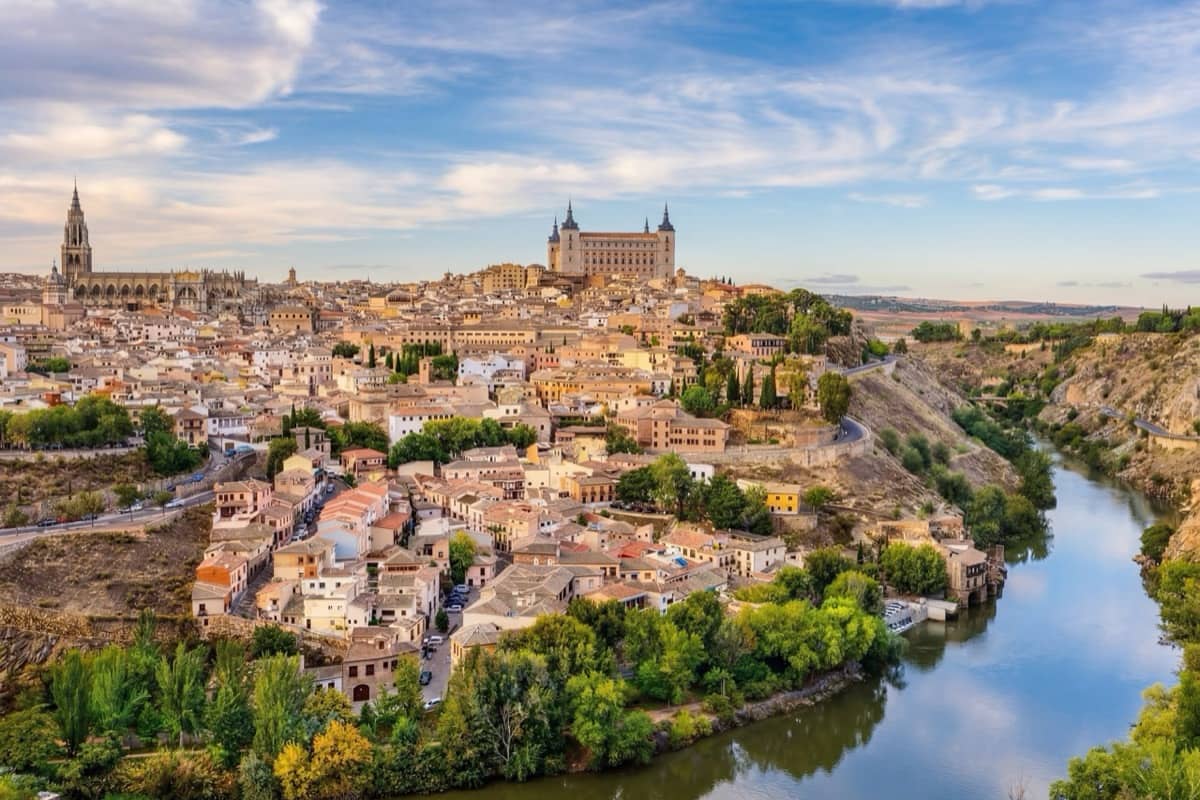
Toledo Day Trip from Madrid – Half-Day Express Tour
Discover Toledo, the city of three cultures, on a half-day express tour from Madrid with transport and bilingual local guide included.
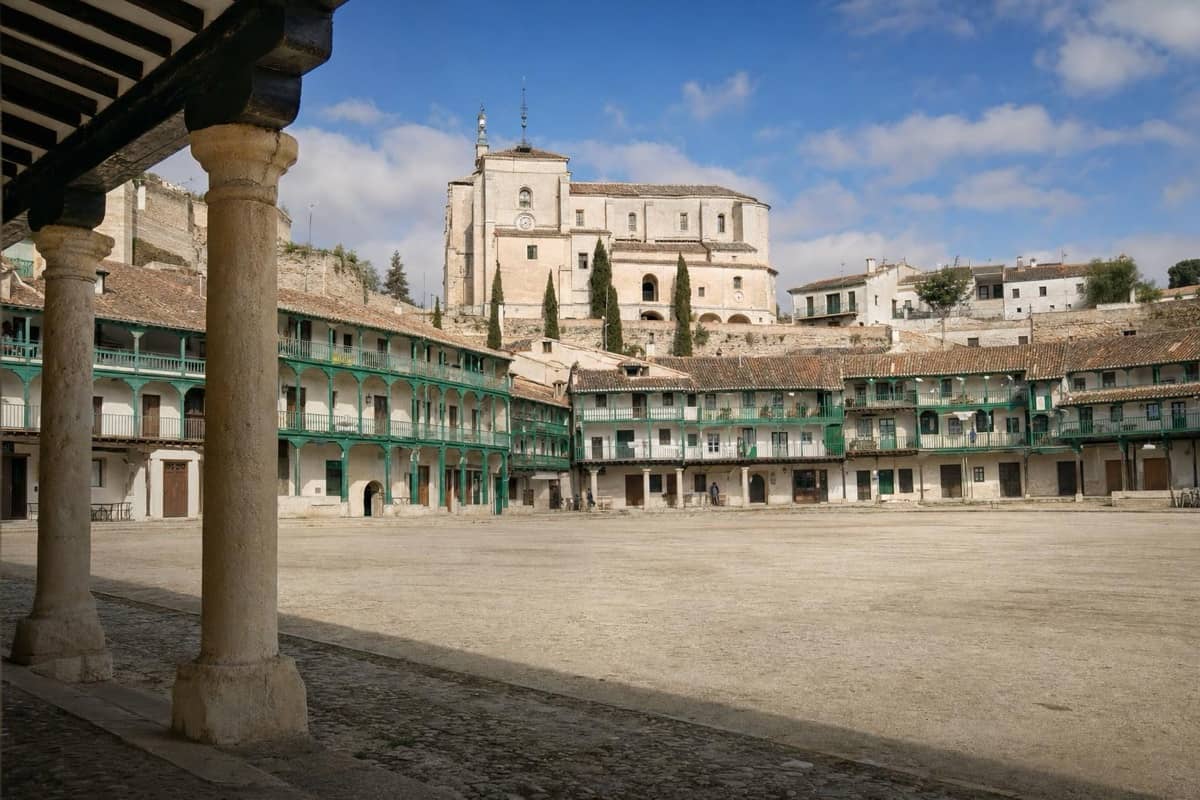
Chinchón, Aranjuez and Toledo from Madrid – Full-Day Trip
Three stops in a single day from Madrid: the Plaza Mayor of Chinchón, the Royal Palace of Aranjuez with admission included and Toledo's old town, with a guided walk at each one and 4 hours of free time in Toledo.
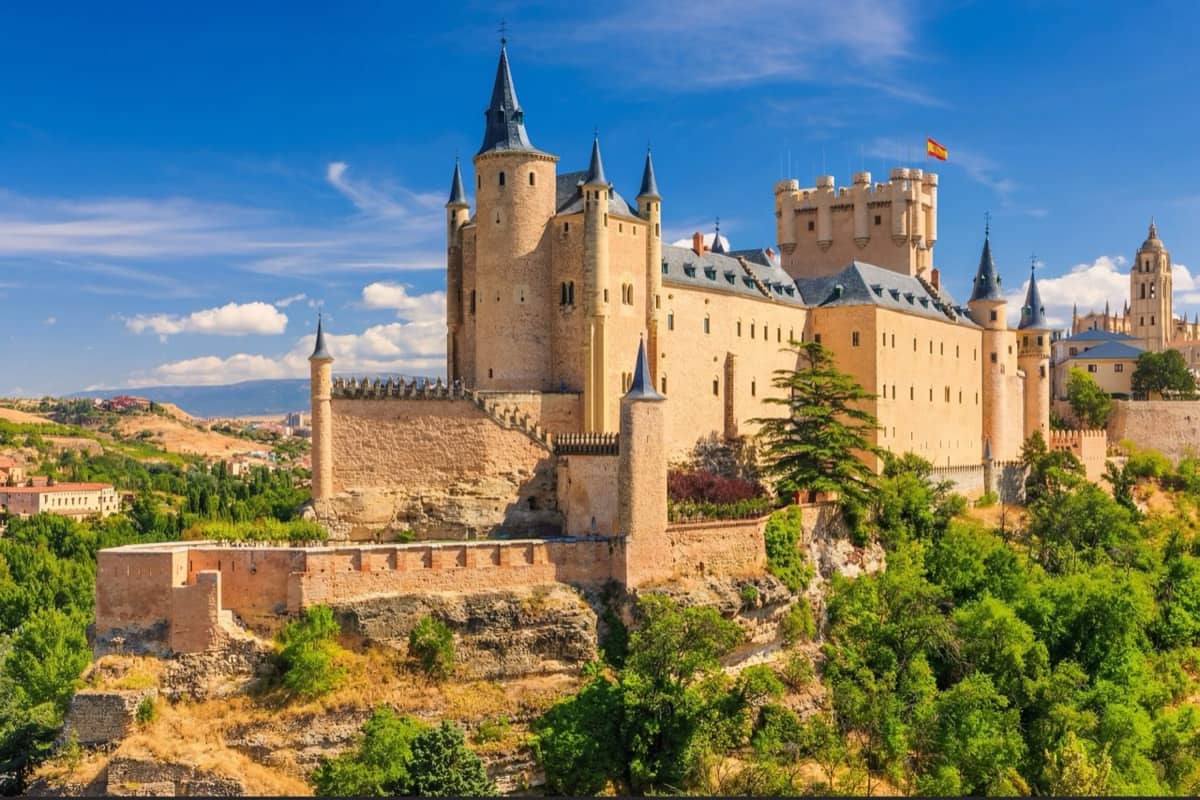
Segovia and Toledo Day Trip from Madrid – Full Day Tour with Guide and Optional Alcázar Entry
Discover two of the most impressive cities near Madrid in one day: medieval historic centers, iconic monuments and free time to enjoy at your own pace.
Staying in Madrid? Madrid sightseeing bus (Big Bus) from €26