

Segovia is one of the most spectacular day-trip destinations from Madrid, and yet one that surprises most people who arrive without knowing quite what to expect. The image of the Roman Aqueduct in the city centre, built 2,000 years ago without a drop of mortar, is the kind that stays with you. The Alcázar that inspired Disney's castle and an imposing Gothic cathedral complete the picture.
Segovia is about 90 km from Madrid and there are several transport options. In this article we explain them all, with the timings, prices and tips that only those who make the journey every week know. And to plan your visit once there, we link our guide to what to see in Segovia in one day.
Getting from Madrid to Segovia by train
The Renfe AVE/AVANT train is the fastest option for getting from Madrid to Segovia: the journey takes between 27 and 30 minutes from Chamartín station. Prices range from €14 to €22 per journey depending on how far in advance you book and the ticket type. Trains run several times a day in both directions.
Pay attention to an important detail that confuses many travellers: Segovia's train station (Segovia-Guiomar) is about 5 km from the historic centre, not in the centre. You'll need to take a taxi (about 10 minutes, around €8-10) or the urban bus line 11 to reach the Aqueduct. This is different from Toledo, where the station is closer. Bear this in mind when calculating timings.
The train is ideal if you're travelling alone or as a couple, if you want timetable flexibility and if you've already planned what to see. In high season (spring-summer) book in advance: seats sell out.
Getting from Madrid to Segovia by bus
Direct buses from Madrid to Segovia are run by Avanza (the historic La Sepulvedana). Departure is from the Moncloa Interchange (not from Plaza Elíptica as with Toledo) and the journey takes between 1 hour 15 minutes and 1 hour 30 minutes. Prices start at around €4.50 per journey, making it the most economical option.
The advantage of the bus over the train is that it drops you at Segovia's bus station, which is much closer to the historic centre than the AVE station. From there you can reach the Aqueduct in about 10 minutes on foot.
It's the most affordable option and runs frequently. The downside is that it can be affected by traffic leaving Madrid, especially on Fridays and the days before long weekends.
Getting from Madrid to Segovia by car
By car, the most direct route is the A-6 to Las Rozas then the AP-61 (toll road) to Segovia, or the toll-free alternative via the N-603. The motorway journey takes about 60-70 minutes depending on traffic.
Parking in Segovia is easier than in Toledo. There are free parking areas around Avenida del Padre Claret, about 10 minutes' walk from the Aqueduct. There's also paid parking near the Alcázar. At weekends the centre fills up with cars, so arrive before 10am if you want to park nearby.
The car is especially worth it if you're travelling in a group or if you want to combine Segovia with the Sierra de Guadarrama mountains or with La Granja de San Ildefonso (the Spanish Versailles, 11 km from Segovia) on the same day.
Guided day trip to Segovia from Madrid
An organised tour from Madrid solves all the logistical problems in one go: you don't need to worry about trains, buses or the distance from the AVE station to the centre. The coach departs from San Bernardo 5 (Gran Vía area) in the morning and arrives directly in the centre of Segovia.
Our full-day Segovia tour includes round-trip air-conditioned coach transport, a professional bilingual guide, a guided walking tour of the historic centre (Aqueduct, Plaza Mayor, Cathedral and the outside of the Alcázar) and free time to eat and explore, with the Alcázar entrance as a paid option (€5 more) to visit during that free time. Total duration: 10 hours 15 minutes.
You can also combine Segovia with Ávila on the same day if you want to make the most of your visit to Castile: early departure from Madrid, a stop in Ávila for photos at the Mirador de los Cuatro Postes and free time, and then Segovia with a guided tour. All in one day, without unnecessary exhaustion.
And once in Segovia, what do you see?
The essentials can be walked in a day: the Roman Aqueduct in Plaza del Azoguejo, the Cathedral —the 'Lady of Cathedrals'—, the Alcázar with the Tower of John II and, at sunset, the classic photo of the castle from the Pradera de San Marcos viewpoint. At midday, the almost-obligatory roast suckling pig.
We tell you hour by hour, with the best order, the prices and the tips, in our guide to what to see in Segovia in one day.
Frequently asked questions
How do I get from Madrid to Segovia?
There are four ways, and Segovia is about 90 km away. By Renfe AVE/AVANT high-speed train from Chamartín station (27 to 30 minutes), by Avanza bus from the Moncloa interchange (1h 15 to 1h 30), by car via the A-6 and AP-61 (or the toll-free N-603), or on a guided tour that leaves from central Madrid and drops you right in the historic centre.
What is the fastest and the cheapest way to reach Segovia?
The fastest is the AVE/AVANT train: 27 to 30 minutes from Chamartín, with fares from €14 to €22 per journey. The cheapest is the Avanza bus from Moncloa, from around €4.50 per journey, though it takes 1h 15 to 1h 30.
Does the train drop you in the centre of Segovia?
Not quite. Segovia-Guiomar station is about 5 km from the historic centre, so you will need a taxi (about 10 minutes, around €8-10) or urban bus line 11 to reach the Aqueduct. The Avanza bus, on the other hand, leaves you much closer: about 10 minutes on foot from the centre.
What time does the guided Segovia tour leave and how long is it?
The Segovia Full Day tour departs at 08:45 from San Bernardo 5 (Gran Vía area) and is a full day, around 10 hours 15 minutes. From €44, with the option to add the Alcázar entrance for €5 more (€49 total), visited during your free time. It includes round-trip air-conditioned coach, a bilingual Spanish/English guide and a guided walking tour of the historic centre. Free cancellation up to 24 hours before.
Related day trips
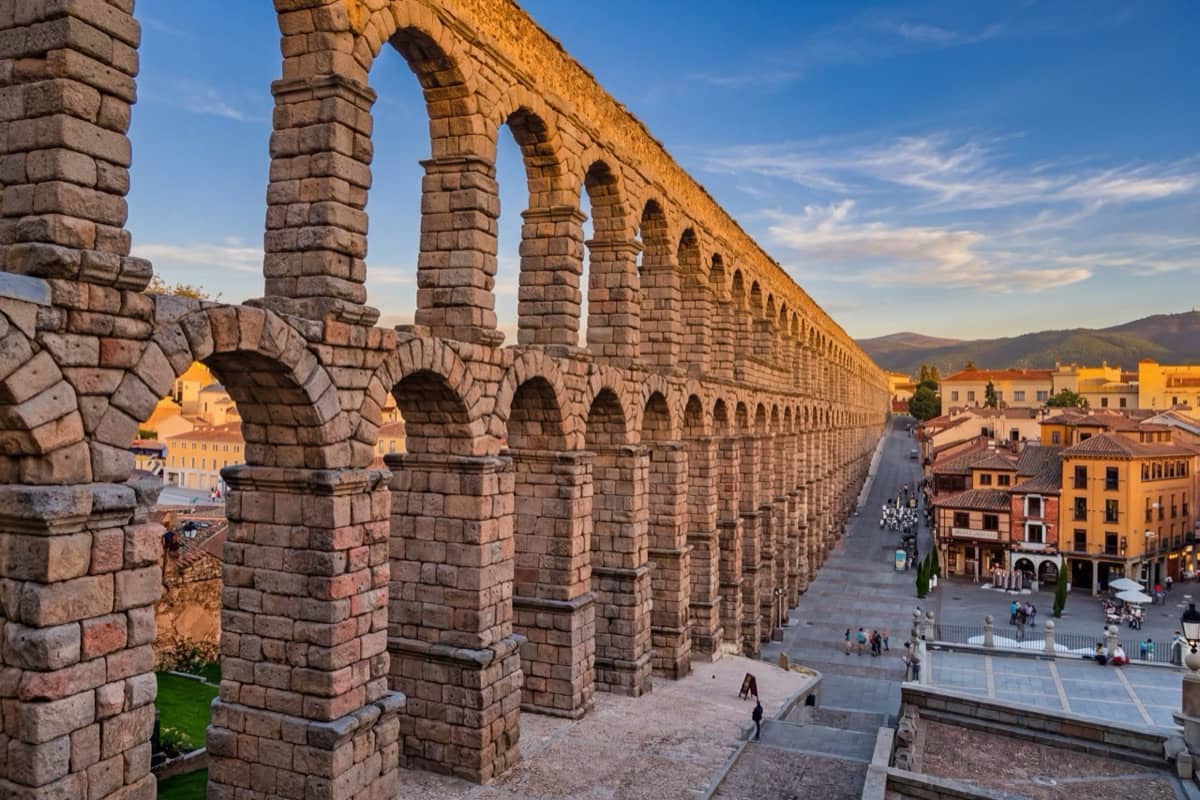
Segovia Day Trip from Madrid – Full Day with Guide and Alcázar Option
Discover Segovia on a full-day trip from Madrid including transport, professional guide, guided walking tour and free time. Optional: Alcázar of Segovia entrance (30 min), visited during your free time.
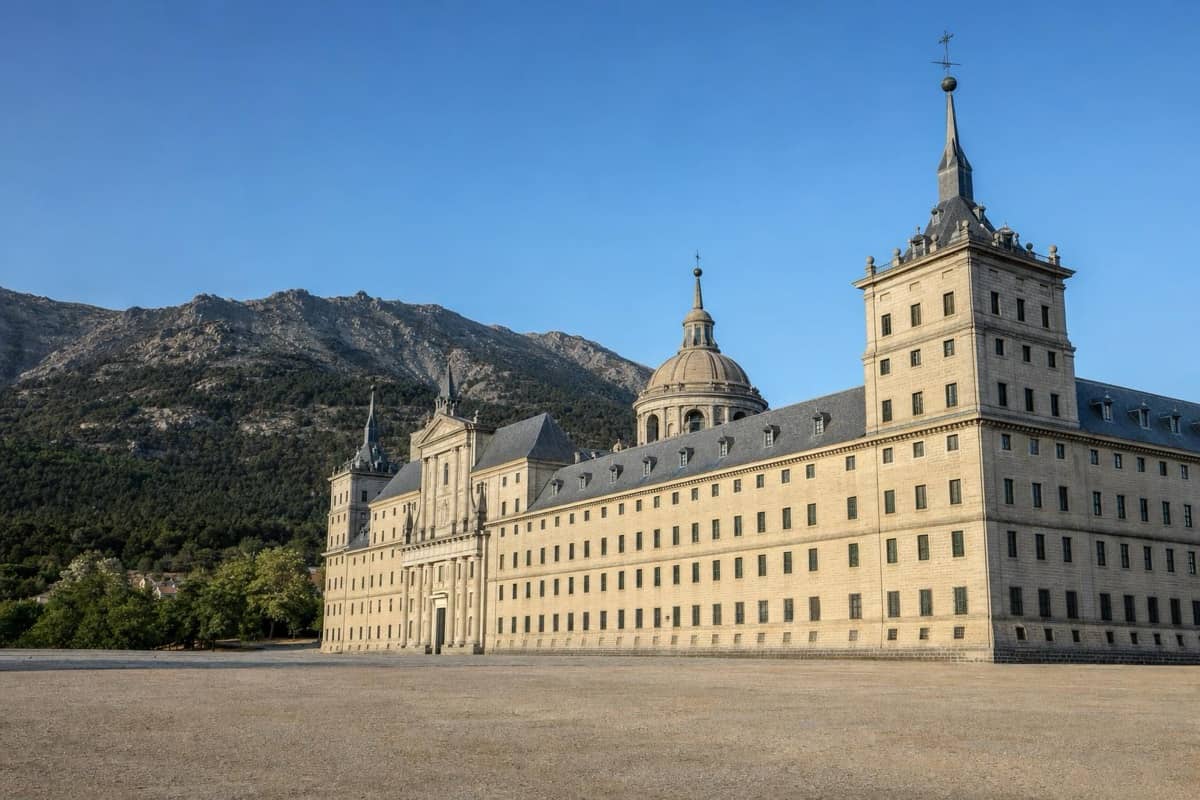
El Escorial, Valley of the Fallen and Segovia from Madrid – Full-Day Trip
El Escorial, the Valley of the Fallen (Valle de Cuelgamuros) and Segovia in one day from Madrid, with a guided walk at each stop and the option to add guided visits inside the Monastery and the Alcázar of Segovia.

Segovia and Toledo Day Trip from Madrid – Full Day Tour with Guide and Optional Alcázar Entry
Discover two of the most impressive cities near Madrid in one day: medieval historic centers, iconic monuments and free time to enjoy at your own pace.
Staying in Madrid? Madrid sightseeing bus (Big Bus) from €26