

Segovia can be seen in a day, and done well. The old town is compact and everything big —Aqueduct, Cathedral and Alcázar— lines up along an uphill walk of barely twenty minutes. The key isn't how much there is to see, but the order in which you see it; this is the route we follow to avoid detours and extra climbs.
If you're still deciding how to get there (AVE, bus or car), we cover it in how to get from Madrid to Segovia; and the full context of the city is in the Segovia from Madrid guide.
Before you start: the order that saves the day
Set off early: in the morning light the Aqueduct photographs better and the monuments are almost empty.
Wear comfortable shoes. The old town is compact but it's on a slope and cobbled; the route climbs from the Aqueduct up to the Alcázar.
Buy your Alcázar and Cathedral tickets ahead in high season. The exact prices and discounts are in the Segovia guide.
And the golden rule of the route: start at the bottom, at the Aqueduct, walk up Calle Real and finish at the top, at the Alcázar. That way you always walk in the same direction and end at the highest, most spectacular point of the city.
Morning: the Aqueduct, Plaza del Azoguejo and the old town
Start at the foot of the Roman Aqueduct, in Plaza del Azoguejo. It's the city's emblem and a genuinely imposing structure: 166 arches, 28 metres tall at its highest point and around 20,000 granite blocks fitted without a drop of mortar, standing since the 1st century.
Take the two photos you have to take: one at the foot of the central arch, looking up, and another from the Postigo del Consuelo, the stairway that climbs to one side and leaves you level with the highest part of the Aqueduct.
Then walk up Calle Real, the shopping street that leads towards the Plaza Mayor, and take a detour through the Jewish quarter —one of the best preserved in Castile— on the way to the Cathedral.
Segovia Cathedral, the Lady of Cathedrals
Presiding over the Plaza Mayor is Segovia Cathedral, the last great Gothic cathedral built in Spain (from the 16th century). Its slenderness and height have earned it the nickname the Lady of Cathedrals.
Inside, in about 30-40 minutes, the cloister, the Flemish tapestries and the chapels are worth a stop. General admission is €9.
It fits well just before lunch: you step out of the Cathedral and you're a short walk from the Alcázar and the cochinillo taverns.
The Alcázar: fairy-tale castle and the Tower of John II
The Alcázar is the climax of the morning. Overlooking the meeting of the Eresma and Clamores rivers, it looks like the prow of a stone ship; its silhouette is the one that, legend has it, inspired Disney's Cinderella castle.
Climb the Tower of John II —152 spiral steps— for one of the best views in Castile: the city, the Cathedral and the Sierra de Guadarrama behind. Inside, the royal halls, the Hall of Kings and the armoury are worth a stop.
The full ticket (palace, museum and Tower of John II) costs €8; without climbing the tower, €5.50. Allow at least an hour. On our full-day tour the entrance is optional: add it when booking for €5 more.
Lunch: roast suckling pig, almost mandatory
It's time for cochinillo asado, the dish that made Segovia famous: crackling skin and meat so tender that, in the classic taverns, it's carved with the edge of a plate. It has its own quality mark, 'Cochinillo de Segovia'.
The ideal time to sit down is between 14:00 and 15:00, without derailing the afternoon. The best-known taverns are around the Plaza Mayor and the Aqueduct; for the specific list and prices, see the Segovia guide.
Book if you're going at the weekend: the historic taverns fill up.
Sunset: the Pradera de San Marcos viewpoint
The classic photo of the Alcázar isn't taken from the Alcázar, but from below: at the Pradera de San Marcos, at the foot of the castle and beside the river, where the fortress is seen whole, outlined like the prow of a ship.
You come down from the Alcázar on a short walk downhill, and the afternoon light is the good one: the granite lights up under the low sun. Just opposite, the Church of the Vera Cruz, a 13th-century temple linked to the Templars, offers another angle of the castle.
Photographer's tip: go at golden hour and look for the Alcázar's reflection in the Eresma.
Extending the day: La Granja de San Ildefonso
If you're driving or your tour includes it and you have the afternoon to spare, about 11 km from Segovia (15 minutes) is the Royal Site of La Granja de San Ildefonso, the 'Spanish Versailles': a royal palace surrounded by gardens with monumental fountains.
The great spectacle is those fountains, which run seasonally —mainly from April to July, with a few big days marked out in spring and summer—. The daytime show costs around €5; check the calendar before you go, because it's very seasonal.
It fits well in the mid-afternoon, before heading back to Madrid.
Segovia independently or with a guide?
On your own you gain total flexibility and a lower base cost; ideal if you already know the city or like to go at your own pace.
With a guide you gain the context of two thousand years of history, the option to add the Alcázar entrance when booking and zero logistics: remember the AVE station (Guiomar) is 5 km from the centre, with its transfers and queues.
Our tour leaves from San Bernardo 5 (Gran Vía area) and takes you straight to the Aqueduct. You can see dates and options in the Segovia day trips from Madrid, with free cancellation. And if you want to make the most of the day, it can be combined with Ávila in a single day.
Frequently asked questions
Can you see Segovia in one day? Yes: the old town is compact and, setting off early, there's time for the Aqueduct, Cathedral, Alcázar, a cochinillo lunch and the viewpoint at sunset. If you're torn between cities, compare in Toledo, Segovia or Ávila.
How many hours do you need for the essentials? With 5-6 hours of actual visiting you cover the essentials; a full day lets you add La Granja de San Ildefonso.
What are the must-sees in Segovia? The Roman Aqueduct, the Alcázar with the Tower of John II and the Gothic Cathedral, finishing at the Pradera de San Marcos viewpoint.
Where do you get the classic photo of the Alcázar? At the Pradera de San Marcos viewpoint, at the foot of the castle beside the river, where the Alcázar looks like the prow of a ship.
How much does it cost to enter the Alcázar of Segovia? The full ticket, including the Tower of John II, costs €8 (€5.50 without climbing the tower).
Is it worth extending the day to La Granja? Yes, if you're driving: the palace and its fountain gardens are about 11 km away, ideal for the mid-afternoon. Organised day trips to Segovia do not stop at La Granja.
Frequently asked questions
Can you see Segovia in one day?
Yes, comfortably. The old town is compact and everything big (Aqueduct, Cathedral and Alcázar) lines up along an uphill walk of about twenty minutes. Set off early and you have time for it all, a cochinillo lunch and the viewpoint at sunset.
What are the must-sees in Segovia?
The Roman Aqueduct (166 arches, 28 metres at its highest point and around 20,000 granite blocks fitted without mortar, standing since the 1st century), the Gothic Cathedral (the Lady of Cathedrals) and the Alcázar with the Tower of John II. Finish at the Pradera de San Marcos viewpoint, where the classic photo of the castle is taken.
How much does it cost to enter the Alcázar of Segovia?
The full ticket, including the Tower of John II, costs €8; without climbing the tower, €5.50. The Cathedral is €9. On our full-day tour the Alcázar entrance is not included: you can add it when booking for €5 more.
How many hours do you need for the essentials?
With 5 to 6 hours of actual visiting you cover the essentials: Aqueduct, Cathedral, Alcázar and the viewpoint. With a full day you can add La Granja de San Ildefonso, about 11 km away (15 minutes), ideal for mid-afternoon.
Related day trips
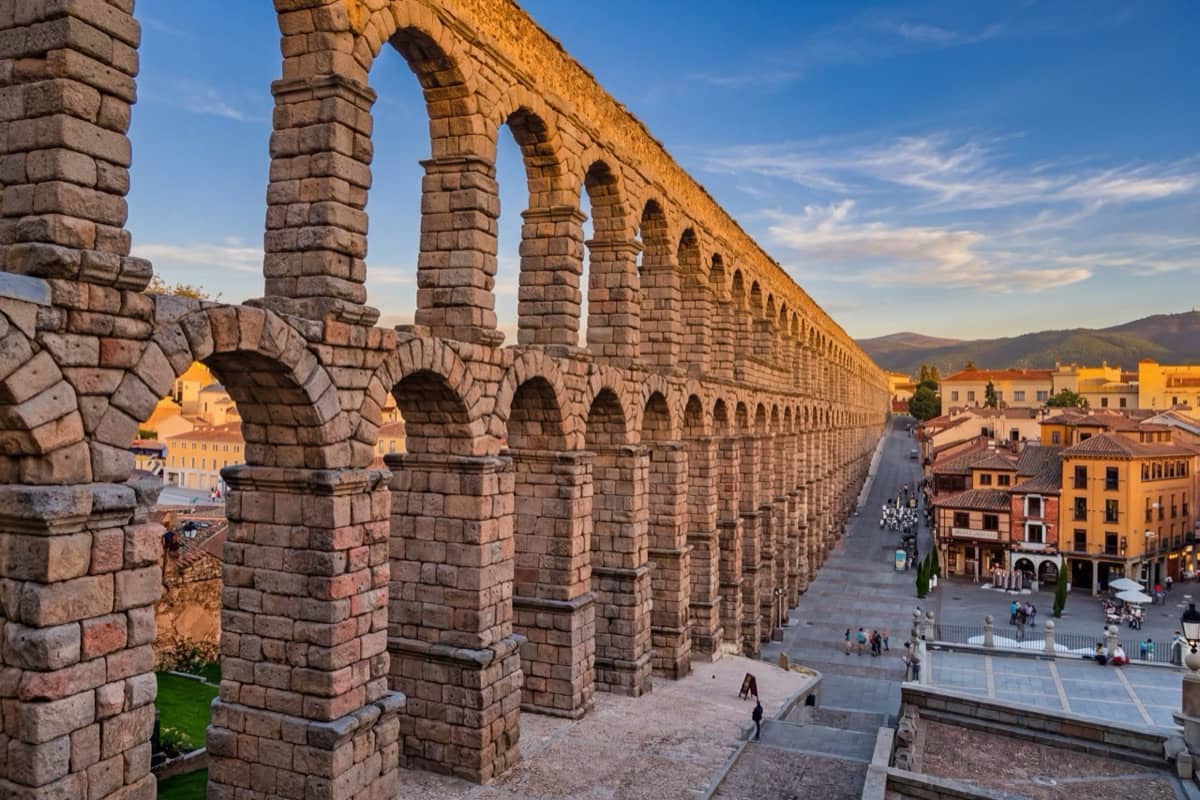
Segovia Day Trip from Madrid – Full Day with Guide and Alcázar Option
Discover Segovia on a full-day trip from Madrid including transport, professional guide, guided walking tour and free time. Optional: Alcázar of Segovia entrance (30 min), visited during your free time.
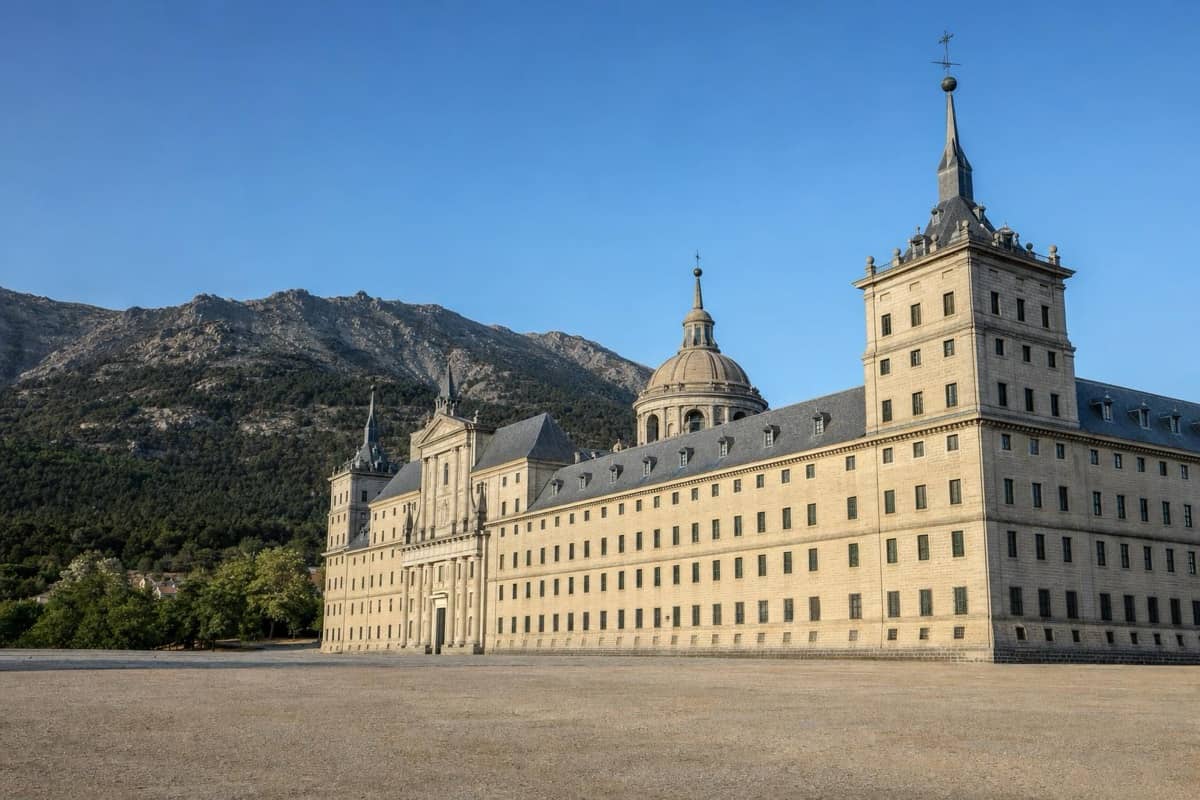
El Escorial, Valley of the Fallen and Segovia from Madrid – Full-Day Trip
El Escorial, the Valley of the Fallen (Valle de Cuelgamuros) and Segovia in one day from Madrid, with a guided walk at each stop and the option to add guided visits inside the Monastery and the Alcázar of Segovia.
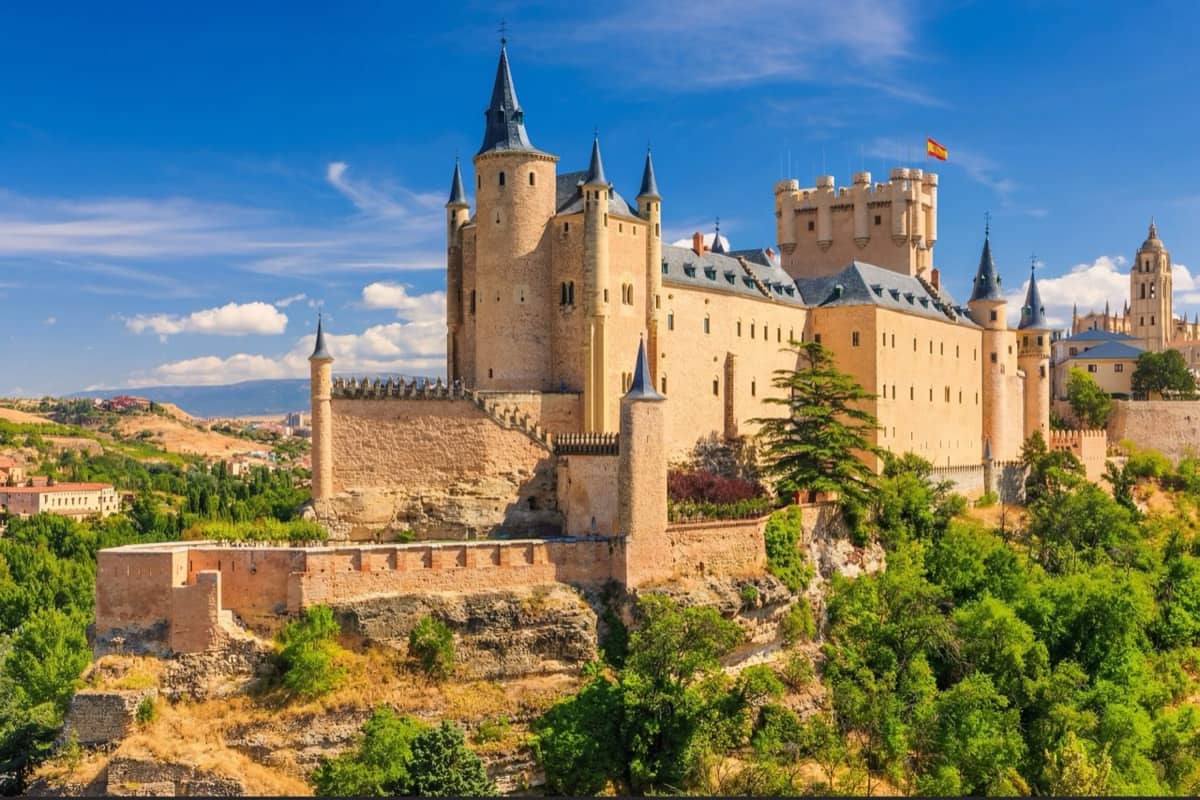
Segovia and Toledo Day Trip from Madrid – Full Day Tour with Guide and Optional Alcázar Entry
Discover two of the most impressive cities near Madrid in one day: medieval historic centers, iconic monuments and free time to enjoy at your own pace.
Staying in Madrid? Madrid sightseeing bus (Big Bus) from €26